Case study
Managing Corn-on-Corn Residue in Minnesota
Farmer
5th generation farmer
Location
Carver & McLeod counties, Minnesota
Crop
Corn and non-GMO soybeans
Application size
1,000 acres per application season
Seasons
Spring and Fall 2025
Tillage
Vertical tillage; transitioning to reduced till
Observed benefits
Faster residue breakdown
Stalks that snapped at the roots
Visible residue changes
Months after application
More workable soil
Re-Gen acres worked up blacker
The challenge
Growing in central Minnesota, the margin for error is thin. Short falls, cool springs, and increasingly volatile weather leave little time for residue breakdown.
Seventy miles west of the Twin Cities, a Re-Gen farmer, who asked to be referred to in this case study as “T.”, grows corn and non-GMO soybeans in a system where roughly 60% of his corn acres follow corn. For T., effective residue management is the difference between fields that warm up and plant on time or fields that lag before the season even starts.
Over the past several years, T. has been deliberately moving away from moldboard plowing. For the last five years, he’s worked toward a reduced-till system built around vertical tillage to protect soil structure while still getting fields ready in the spring.
But heavy corn residue remained the limiting factor.
“My main goal is to get residue broken down so the soil looks like it did after a moldboard plow—black, warming up faster, collecting sunlight,” T. said. “But without actually plowing.”
He had experimented with biologicals before, including nitrogen-fixing products, but never saw consistent results. And like many broad-acre growers in northern climates, he questioned whether biologicals could truly perform under cold, variable conditions.
The approach
When he decided to try Re-Gen, T. committed at a meaningful scale.
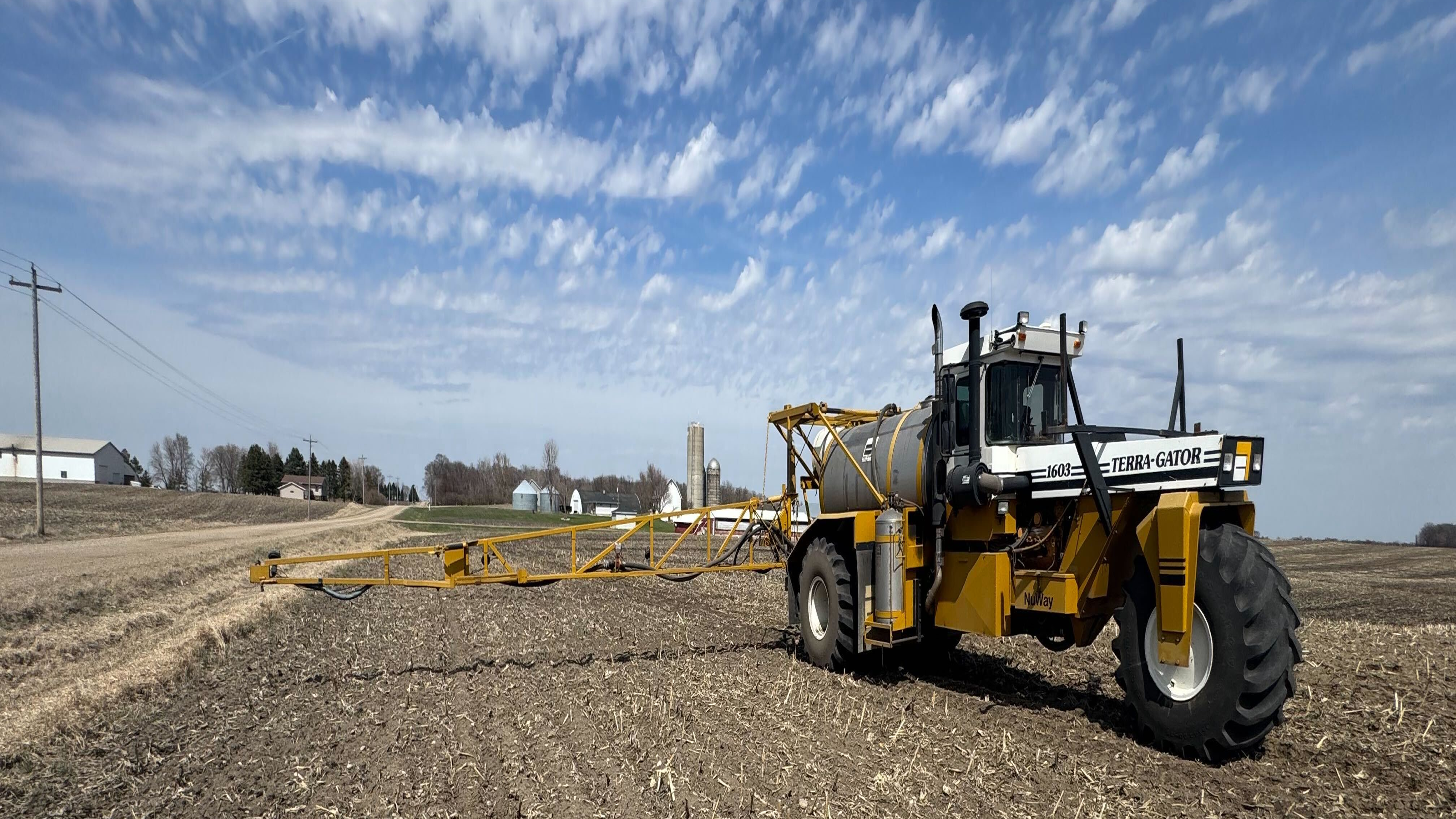
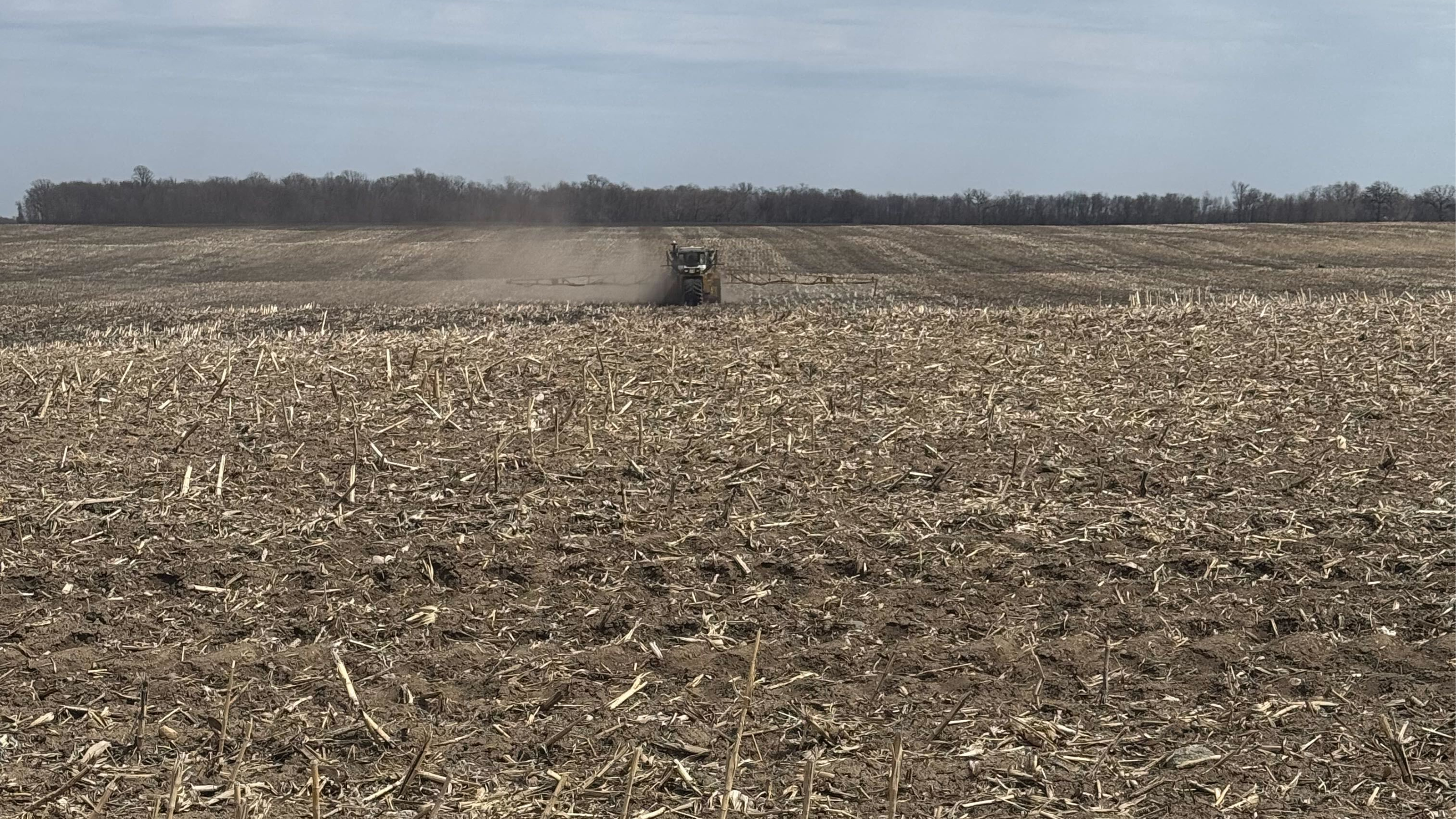
In the spring of 2025, he applied Re-Gen across 1,000 acres, broadcasting it on worked corn residue two to three weeks before planting, then incorporating it with a vertical tillage pass. The objective was clear: determine whether Re-Gen could reliably accelerate residue breakdown across real acreage, under real conditions.
In fall, he expanded Re-Gen onto another 1,000 acres, applying it directly to standing corn stalks. With tight post-harvest windows being the norm in his region, T. used those acres to test how Re-Gen fit into the realities of his operation.
“If it has to sit untouched for two weeks every time, that’s not realistic for me,” he said. “I needed to see how it worked the way we actually farm.”
T. also worked with IMIO to assess Re-Gen’s compatibility with his existing inputs. While some combinations weren’t suitable, Re-Gen ultimately ran as its own pass.
Early observations
For T., the differences were easy to see in the field.
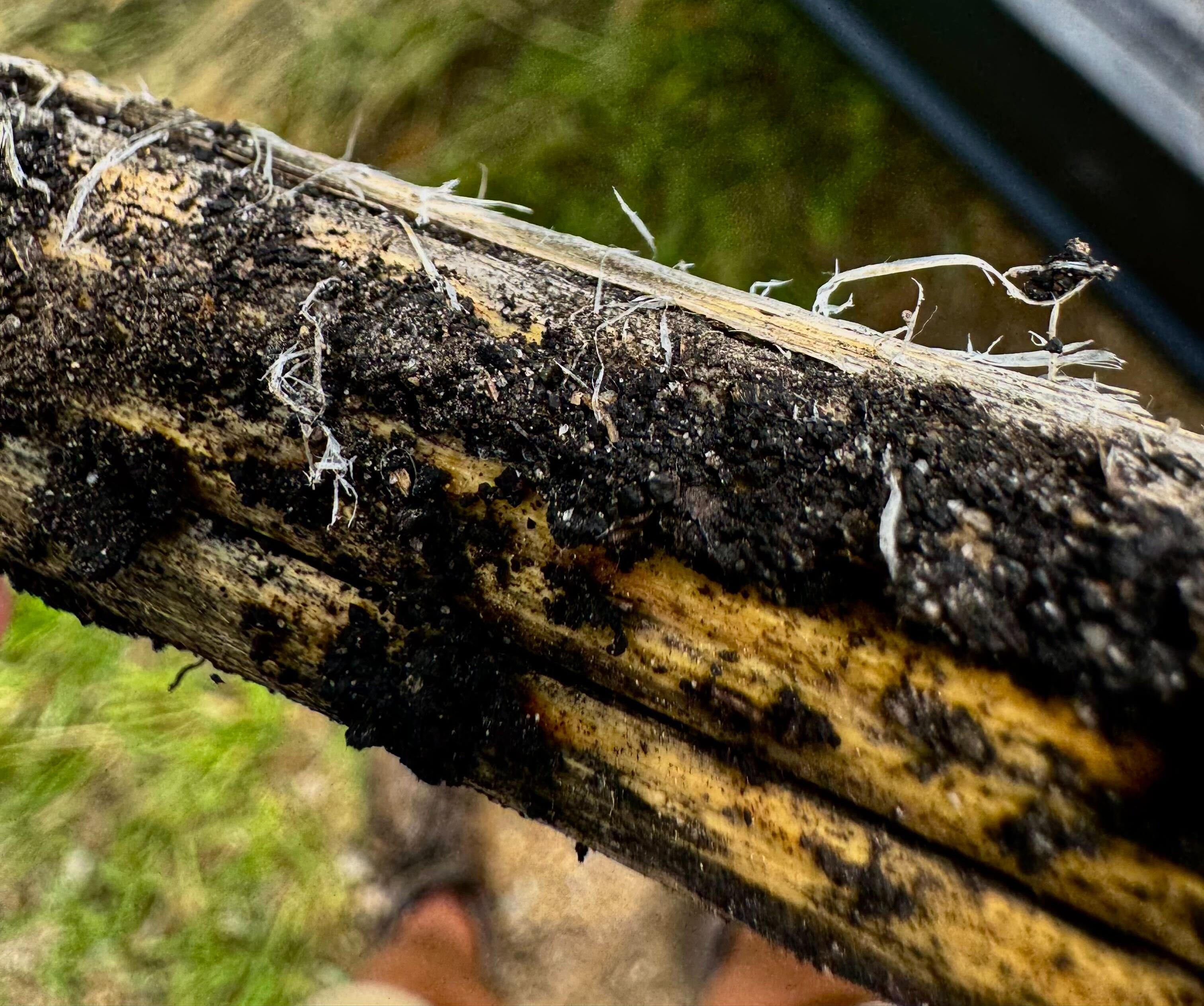
By mid-season, he began noticing visible microbial activity on treated stalks. “You could see things growing on the stalks,” he said. “They were definitely decaying faster in the Re-Gen fields.”
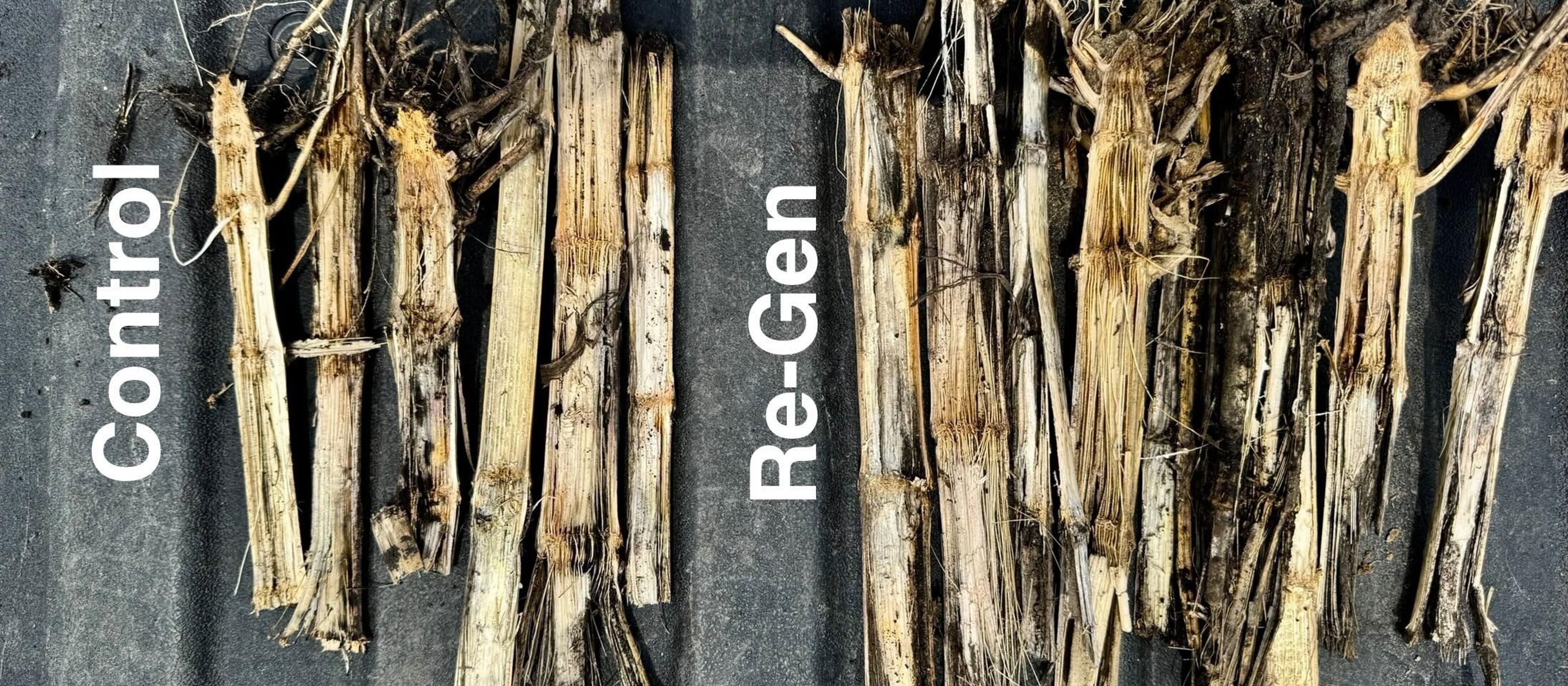
Later in the year, while installing drainage tile on a field treated the previous spring, the contrast became even clearer. T. observed white growth on stalks in treated fields months after application, along with residue that detached more easily. When T. grabbed the residue by hand, most stalks snapped cleanly at the roots. In untreated fields, many remained firmly anchored.
Even the feel of the residue had changed.
“The trash is less crunchy,” T. said. “It’s softer—still brittle, but not that hard, crisp residue you usually fight.”
That same pattern carried through to fall tillage. On acres where Re-Gen had time to work before a vertical tillage pass, fields consistently worked up darker and more uniform.
Results so far
T.’s goal from the start was simple: manage residue more effectively without returning to heavy tillage. On that front, Re-Gen has already delivered.
Across both spring- and fall-treated acres, residue softened and decayed more quickly, stalks detached at the roots with ease, and fall-treated ground consistently worked up darker—much closer to the warm, uniform soil T. aims for in spring.
Yield wasn’t a primary objective in year one, and formal comparisons aren’t complete. But T. expects the data to become more meaningful in year two, especially on fall-applied acres where biology has the longest interaction with residue.
“I think we’ll see more from year two than year one,” he said. “When the biological touches more residue in the fall and then gets mixed in the spring, that’s where I expect the biggest difference.”
The verdict
For a farmer operating in a short, demanding growing season, residue management can’t be a gamble.
For T., Re-Gen has proven itself where it matters most: in the field, in the residue, and in results he can see and touch. That visible, repeatable performance has earned his confidence and a growing share of his acres.
“Based on what I’m seeing in the residue and how the fields are working up,” T. said, “I’m confident enough to keep going.”
For T., Re-Gen isn’t a finished story. It’s a promising one that’s just getting started.